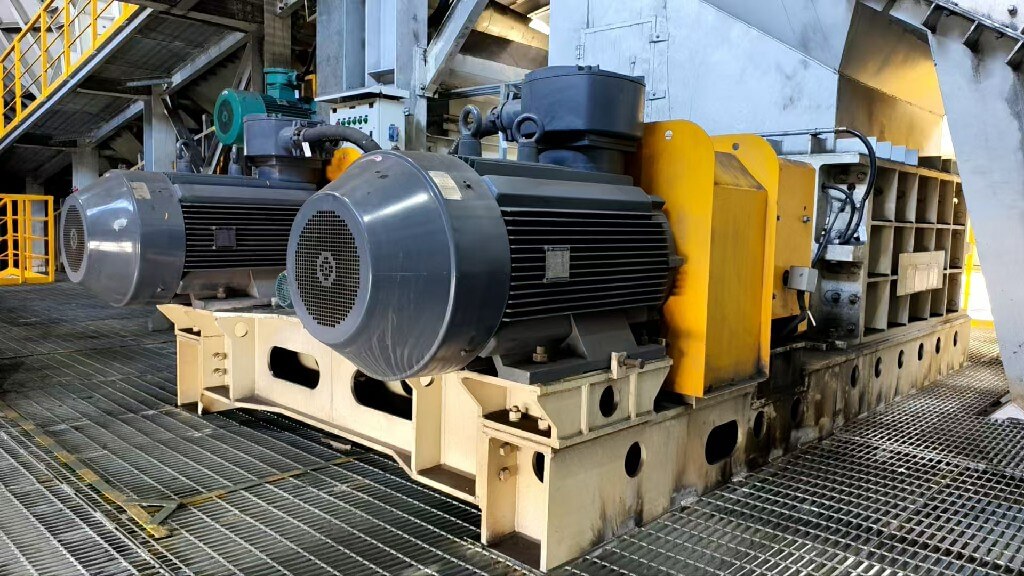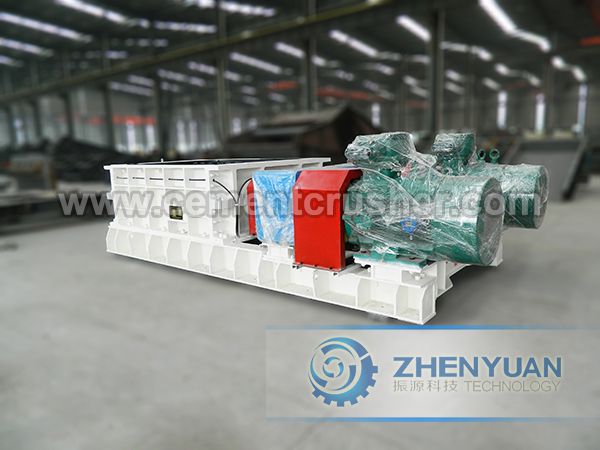

Product Overview
A Coal Roll Sizer is a roll-type crushing and sizing machine used to reduce oversized coal and produce a more manageable particle-size range for downstream handling or processing. It is commonly installed in coal mines, coal handling plants, power stations and coal preparation facilities where consistent feed sizing is required.
The machine uses a pair of rotating rolls to process coal as it passes through the working zone. The roll surface engages with the incoming material and breaks oversized lumps before they leave through the discharge opening.
Compared with general-purpose crushing equipment, a Coal Roll Sizer is typically selected when the process requires controlled coal sizing and a compact crushing arrangement.
How Does a Coal Roll Sizer Work?
Coal enters the machine through the feed opening and moves toward the rotating rolls.
As the rolls rotate, their working surfaces engage with oversized coal lumps. The coal is subjected to mechanical forces that cause the larger pieces to fracture and reduce in size.
The spacing between the rolls establishes the primary sizing condition. The roll profile and operating speed also influence how material is captured and released.
The basic process is:
Coal Feed → Roll Engagement → Size Reduction → Sized Discharge
After leaving the Coal Roll Sizer, the material can move directly to a conveyor or pass through a screening stage when tighter size separation is required.
Key Features
Roll-Based Coal Sizing
The twin-roll arrangement creates a defined working zone for reducing oversized coal and preparing a more consistent feed for subsequent processes.
Controlled Product Range
The crushing gap and roll configuration can be selected according to the required coal size specification.
Continuous Coal Handling
The equipment can be installed directly within a continuous coal flow system, reducing the need for intermediate material handling.
Adaptable Roll Profiles
Different roll surfaces and profiles can be considered for different coal characteristics and sizing requirements.
Heavy-Duty Drive System
The drive assembly is designed to provide the rotational force required for continuous coal processing.
Process-Friendly Layout
The compact roll arrangement makes the machine suitable for integration with coal feeders, screens, transfer points and conveyors.
Technical Specifications
| Parameter | Specification |
|---|---|
| Equipment Type | Coal Roll Sizer |
| Crushing Mechanism | Twin Rotating Rolls |
| Application | Coal Sizing & Crushing |
| Material | Coal and Suitable Coal-Bearing Materials |
| Capacity | Application Dependent |
| Maximum Feed Size | Project Dependent |
| Product Size | Project Dependent |
| Roll Configuration | Customized |
| Motor Power | Application Dependent |
| Drive System | Electric |
| Installation | Stationary / Customized |
Actual equipment dimensions and operating parameters should be determined from the coal feed and process requirements.
Main Components & Design
Sizing Rolls
The two rolls form the main working assembly. Their diameter, width and surface configuration affect material capture and coal throughput.
Roll Surface
The working profile can be selected according to the coal size, feed condition and desired reduction ratio.
Drive Assembly
The motor and transmission system rotate the rolls at the required operating speed.
Shafts and Bearings
The shafts transfer torque to the rolls, while the bearing assemblies support the rotating components under continuous loading.
Crusher Frame
The frame maintains the alignment of the rolls and supports the mechanical assemblies.
Feed and Discharge Sections
The inlet and outlet geometry should be coordinated with the upstream feeder and downstream conveyor or screen.
Applications & Coal Processing
A Coal Roll Sizer can be used in:
- Run-of-mine coal handling
- Coal transfer stations
- Coal preparation plants
- Power plant coal handling
- Coal stockyard systems
- Screening and sizing circuits
It may be applied to coal such as:
- Thermal coal
- Coking coal
- Bituminous coal
- Sub-bituminous coal
- Lignite
- Other suitable coal-bearing materials
The actual equipment configuration depends on coal hardness, moisture, lump size, bulk density and the required product specification.
How to Choose the Right Coal Roll Sizer?
Coal Roll Sizer selection should begin with the required coal size and process capacity.
Determine the maximum lump size entering the machine and the target size after reduction. The difference between these two conditions helps establish the required roll arrangement and working gap.
Throughput is another major factor. A coal plant handling several hundred tonnes per hour may require a substantially different roll size and drive arrangement from a smaller material-handling system.
Coal characteristics should also be considered. Moisture can affect flow through the machine, while harder mineral inclusions can increase wear on the roll surface.
The position of the equipment in the plant is equally important. A Coal Roll Sizer installed directly after ROM extraction may require a different configuration from one used to prepare coal before a screening or washing stage.
For equipment evaluation, provide:
Coal Type + Capacity + Maximum Lump Size + Target Coal Size + Moisture + Mineral Content + Plant Layout
Advantages & Customization
A Coal Roll Sizer provides a dedicated approach to reducing oversized coal within a continuous handling circuit. Its roll-based configuration allows the sizing function to be coordinated with the requirements of conveyors and screens.
Customization can include:
- Roll diameter
- Roll width
- Roll surface profile
- Roll spacing
- Feed opening
- Discharge opening
- Motor power
- Drive arrangement
- Wear-resistant components
- Overall machine dimensions
For plants with restricted installation space, the machine dimensions and inlet/outlet arrangement can also be coordinated with the existing coal-handling system.
Frequently Asked Questions
A Coal Roll Sizer is a roll-type machine used to reduce oversized coal and produce a controlled coal size for downstream handling or processing.
Coal passes between two rotating rolls. The rolls engage with oversized pieces and reduce them before the material exits through the discharge zone.
It is used in coal mines, coal preparation plants, transfer stations, power plant fuel systems and other applications requiring controlled coal sizing.
The final coal size depends on the roll spacing, roll profile, feed characteristics and equipment configuration. The required product size should be specified during equipment selection.
A suitably configured machine can process large coal feed, but the maximum lump size must be matched with the feed opening and roll dimensions.
It can be considered for certain wet-coal applications. However, high moisture or clay content can affect material flow and should be evaluated during equipment selection.
Wear is influenced by coal hardness, abrasive mineral content, operating hours, feed size and the selected roll-surface material.
Yes. A common arrangement is:
Feeder → Coal Roll Sizer → Screen → Conveyor
The screen can separate the sized coal or remove remaining oversize material according to the process design.
| Primary Coal Roll Sizer | ||||
| 150 Series Primary Coal Roll Sizer | ||||
| Model&Specification | 2PLF-150/250 | 2PLF-150/300 | 2PLF-150/350 | 2PLF-150/400 |
| Roller Diameter(mm) | 1500 | 1500 | 1500 | 1500 |
| Roller Length(mm) | 2500 | 3000 | 3500 | 4000 |
| Input Size(mm) | ≤1500 | ≤1500 | ≤1500 | ≤1500 |
| Output Size(mm) | ≤300 | ≤300 | ≤300 | ≤300 |
| Capacity(t/h) | ≤4500 | ≤5500 | ≤6500 | ≤7500 |
| 140 Series Primary Coal Roll Sizer | ||||
| Model&Specification | 2PLF-140/200 | 2PLF-140/250 | 2PLF-140/300 | 2PLF-140/350 |
| Roller Diameter(mm) | 1400 | 1400 | 1400 | 1400 |
| Roller Length(mm) | 2000 | 2500 | 3000 | 3500 |
| Input Size(mm) | ≤1400 | ≤1400 | ≤1400 | ≤1400 |
| Output Size(mm) | ≤300 | ≤300 | ≤300 | ≤300 |
| Capacity(t/h) | ≤3000 | ≤4000 | ≤5000 | ≤6000 |
| 120 Series Primary Coal Roll Sizer | ||||
| Model&Specification | 2PLF-120/150 | 2PLF-120/200 | 2PLF-120/250 | 2PLF-120/300 |
| Roller Diameter(mm) | 1200 | 1200 | 1200 | 1200 |
| Roller Length(mm) | 1500 | 2000 | 2500 | 3000 |
| Input Size(mm) | ≤1200 | ≤1200 | ≤1200 | ≤1200 |
| Output Size(mm) | ≤300 | ≤300 | ≤300 | ≤300 |
| Capacity(t/h) | ≤1500 | ≤2000 | ≤2500 | ≤3000 |
| 100 Series Primary Coal Roll Sizer | ||||
| Model&Specification | 2PLF-100/120 | 2PLF-100/150 | 2PLF-100/200 | 2PLF-100/250 |
| Roller Diameter(mm) | 1000 | 1000 | 1000 | 1000 |
| Roller Length(mm) | 1200 | 1500 | 2000 | 2500 |
| Input Size(mm) | ≤1000 | ≤1000 | ≤1000 | ≤1000 |
| Output Size(mm) | ≤300 | ≤300 | ≤300 | ≤300 |
| Capacity(t/h) | ≤800 | ≤1200 | ≤1500 | ≤2000 |
| Secondary Coal Roll Sizer | ||||||||||
| 100 Series Secondary Coal Roll Sizer | ||||||||||
| Model&Specification | 2PLF-100/150 | 2PLF-100/200 | 2PLF-100/250 | 2PLF-100/300 | 2PLF100/350 | |||||
| Roller Diameter(mm) | 1000 | 1000 | 1000 | 1000 | 1000 | |||||
| Roller Length(mm) | 1500 | 2000 | 2500 | 3000 | 3500 | |||||
| Input Size(mm) | ≤400 | ≤400 | ≤400 | ≤400 | ≤400 | |||||
| Output Size(mm) | 50-150 | 50-150 | 50-150 | 50-150 | 50-150 | |||||
| Capacity(t/h) | 400-800 | 500-1000 | 650-1200 | 800-1500 | 1000-1800 | |||||
| 80 Series Secondary Coal Roll Sizer | ||||||||||
| Model&Specification | 2PLF-80/150 | 2PLF-80/200 | 2PLF-80/250 | 2PLF-80/300 | ||||||
| Roller Diameter(mm) | 800 | 800 | 800 | 800 | ||||||
| Roller Length(mm) | 1500 | 2000 | 2500 | 3000 | ||||||
| Input Size(mm) | ≤300 | ≤300 | ≤300 | ≤300 | ||||||
| Output Size(mm) | 50-150 | 50-150 | 50-150 | 50-150 | ||||||
| Capacity(t/h) | 300-500 | 400-800 | 500-1200 | 600-1500 | ||||||
| 60 Series Secondary Coal Roll Sizer | ||||||||||
| Model&Specification | 2PLF-60/120 | 2PLF-60/160 | 2PLF-60/200 | |||||||
| Roller Diameter(mm) | 600 | 600 | 600 | |||||||
| Roller Length(mm) | 1200 | 1600 | 2000 | |||||||
| Input Size(mm) | ≤300 | ≤300 | ≤300 | |||||||
| Output Size(mm) | 50-150 | 50-150 | 50-150 | |||||||
| Capacity(t/h) | 200-400 | 250-600 | 300-800 | |||||||