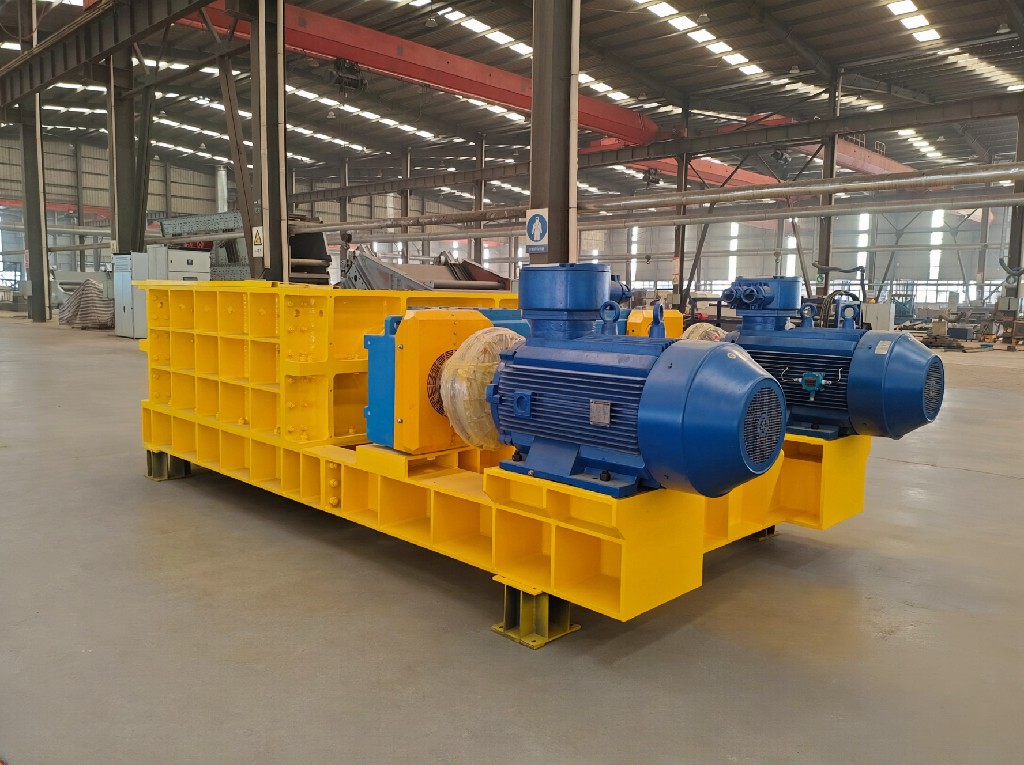
When a mineral sizer starts producing more fines, pulling higher torque, or losing its ability to grip oversize feed, the problem is rarely solved by ordering “a set of teeth” from the quickest source. The visible tooth is only one part of a working system. Its profile, alloy, attachment, shaft interface, spacing, and relationship with the breaker bar all influence capacity, product size, power draw, and unplanned downtime.
That is why experienced mining and coal-processing buyers treat mineral sizer wear parts as an engineering purchase, not a catalogue transaction. A low unit price can be attractive on the purchase order and expensive on the plant floor if the parts do not fit correctly, wear unevenly, damage a parent component, or arrive after a critical shutdown window has closed.
This practical sourcing checklist helps project engineers, maintenance teams, and procurement managers evaluate mineral sizer teeth and related wear parts with the same discipline used for the machine itself. It applies to twin-shaft mineral sizers, coal sizers, feeder breakers, and similar low-speed, high-torque crushing equipment.
Why Mineral Sizer Wear Parts Deserve a Technical Buying Process
Unlike high-speed impact crushing, a mineral sizer breaks material mainly through controlled compression, shear, and tooth engagement between slowly rotating shafts. Its wear package must therefore do more than resist abrasion. It must bite into the feed, release crushed material cleanly, tolerate impact, and protect the rotor or tooth carrier beneath it.
The actual wear pattern is shaped by the application:
- Coal and lignite: Moisture, clay, tramp material, and changing seam conditions can cause plugging, tooth rounding, and uneven loading.
- Hard or abrasive ore: Quartz, competent rock, and abrasive gangue can remove tooth mass quickly and erode side faces, leading edges, and breaker bars.
- Salt, gypsum, clay, or sticky minerals: Build-up can reduce the effective tooth gap, alter the product size, and accelerate wear in unexpected areas.
- ROM feed with oversize: Large lumps and drop impact place high local loads on tooth tips, fasteners, and the tooth carrier.
Two sites can run the same model of mineral sizer at the same nominal tonnes per hour and require very different wear solutions. The first rule of sourcing is simple: buy against the real duty, not a generic machine description.
Step 1: Define the Wear-Part Duty Before Requesting a Quote
An RFQ that says only “mineral sizer teeth required” invites assumptions. Give every bidder the same application data so that the quotations can be compared on a like-for-like basis.
Include the following in the enquiry:
| Information to provide | Why it changes the wear-part selection |
|---|---|
| Sizer make, model, serial number, and shaft configuration | Identifies the correct mounting system, tooth pitch, and component interfaces. |
| Material name and operating condition | Determines whether abrasion, impact, stickiness, corrosion, or a combination is dominant. |
| Bulk density, moisture, hardness, and abrasive content | Helps the supplier choose the right alloy and tooth geometry rather than an arbitrary “high-chrome” option. |
| Maximum lump size, feed gradation, and tramp-metal risk | Establishes the expected tooth loading and potential for impact damage. |
| Normal and peak throughput, operating hours, and feed arrangement | Connects part life to duty cycle, surge loading, and production consequence. |
| Current wear photos and measurements, if available | Reveals actual failure modes that a drawing alone cannot show. |
| Desired product size and breaker-bar setting | Confirms that the proposed tooth profile will support the crushing duty. |
If you are replacing parts on an operating machine, record more than the hours since the last changeout. Measure tooth height, tip width, root condition, side wear, fastener condition, and gap development at several positions across both shafts. A set that wears faster at the feed end, for example, may point to a loading issue or a different material zone—not necessarily a poor alloy.
Step 2: Identify Exactly Which Mineral Sizer Wear Parts Are in Scope
The word “tooth” is often used too broadly. A complete mineral sizer wear package may contain multiple components with different replacement cycles and technical requirements:
- Tooth segments or tooth shells: The primary gripping and crushing surfaces. Confirm whether each piece is solid, replaceable, hardfaced, or a wear shell fitted over a carrier.
- Tooth carriers, rings, or drums: Structural interfaces that transfer crushing load into the shafts. They may be reusable, but damage or distortion here can make new teeth perform poorly.
- Breaker bars, combs, and side wear liners: Stationary parts that work with the rotating teeth to control breakage and protect the housing.
- Fasteners, wedges, pins, and retaining hardware: Small items with an outsized influence on safety, fit, and changeout time. Treat them as part of the supply scope.
- Shaft-end seals and related protection components: Not always a wear part, but often worth reviewing during a major changeout when access is available.
Ask the vendor to separate these items in the quotation. This makes it easier to plan commissioning spares, normal operating stock, and higher-value capital spares. It also prevents an apparent price advantage created by quoting a tooth body without the hardware needed to install it.
Step 3: Check Geometry and Fit Before Comparing Materials
For sizer crusher wear parts, correct fit is the first performance requirement. A premium alloy cannot compensate for a tooth segment that seats on a worn carrier incorrectly, interferes with an adjacent segment, or changes the designed shaft-to-shaft clearance.
Request and verify:
- Part number, drawing revision, and the machine serial-number range to which the part applies.
- A controlled drawing or dimensional inspection record covering the mounting face, key locating features, bolt/pin positions, tooth pitch, and critical clearances.
- Tooth height, working profile, leading-edge shape, and orientation for each shaft position where parts are not identical.
- The required breaker-bar gap, side clearance, and installation torque or retention method.
- A statement of whether the parts are interchangeable with the existing carrier, rotor, or drum assembly.
Do not rely on photographs, an overall length, or a supplier’s statement that a part “fits the same model.” Mineral sizers are often customized over their service life. Differences in shaft spacing, tooth sequence, mounting detail, or a past retrofit can be invisible in a general arrangement drawing.
For a first-time alternative source, a sensible control is to order a trial quantity, conduct a dimensional check before shipment, and install it in a planned maintenance window. This is not needless caution; it is cheaper than discovering an interference condition after the complete set has been delivered to a remote mine.
Step 4: Select the Material for the Failure Mode, Not the Marketing Label
Wear-part descriptions such as “super alloy,” “high wear resistant,” or “premium hardfacing” are not specifications. Ask what the component is made from, how it is produced, and why that solution suits your feed.
Depending on duty, a mineral sizer manufacturer may propose a heat-treated alloy steel, a manganese-steel design, a high-chromium cast solution, a composite or carbide-reinforced option, or a base material with deposited hardfacing. None is universally best.
- A tougher alloy may be preferable where large lumps and impact create a risk of chipping or fracture.
- A harder wear surface may be valuable where abrasion is severe and impact is controlled.
- Hardfacing can restore or protect selected areas, but its quality, bond, thickness, and repairability must suit the parent material and the service conditions.
- A complex material with excellent laboratory hardness may be the wrong choice if it is difficult to weld, cannot tolerate impact, or has an unacceptable replacement lead time.
Ask for the material grade, target hardness range where relevant, heat-treatment method, and quality-control records appropriate to the order. For cast components, clarification of casting quality, inspection, and traceability is especially useful. The goal is not to prescribe a metallurgy you have not validated; it is to make the vendor’s recommendation transparent and technically accountable.
Step 5: Evaluate the Tooth Design as a Crushing Tool
The profile of a mineral sizer tooth determines how the machine engages feed. A tall, aggressive form may grip large material effectively, while a different profile may be needed to reduce fines, release sticky feed, or manage a specified product size. The most durable profile is not automatically the most productive one.
During technical review, ask the supplier to explain:
- How the tooth geometry supports the feed size, material behavior, and target product size.
- Which areas are expected to wear first and how that wear affects capacity and sizing performance.
- Whether tooth sequencing differs along the shaft or between shafts.
- Whether parts must be installed in a defined orientation or pattern.
- What minimum tooth height or dimensional limit should trigger replacement.
- Whether worn teeth should be replaced individually, in matched positions, or as a full set.
This discussion often exposes an important distinction: a replacement can be dimensionally compatible yet not be functionally equivalent. If tooth form, pitch, or profile changes, obtain a clear written explanation of the expected effect on crushing performance before approving the change.
Step 6: Assess Manufacturing Quality and Traceability
A reliable wear part is the result of controlled design and production, not only chemical composition. The vendor should be able to explain how it controls repeatability from one batch to the next.
Use this checklist when evaluating a prospective supplier:
- Can the supplier identify the raw-material grade and provide batch traceability where agreed?
- Are casting, forging, machining, heat treatment, or hardfacing performed under documented process controls?
- Are critical mounting and working dimensions inspected against a controlled drawing?
- Is each part marked with a part number, batch reference, or another practical means of identification?
- Can the supplier provide inspection records, material certificates, or hardness results when specified?
- Does it have a procedure for non-conformance, replacement, and corrective action?
- Can it show experience with comparable mineral sizer wear parts and material conditions?
Factory capability matters, but evidence matters more. Clear photographs of production are useful; dimensional records, traceable sample reports, and a technically complete proposal are more useful. For a high-value or critical order, consider a pre-shipment inspection focused on the dimensions and documentation that affect installation.
Step 7: Score Vendors on More Than Their Unit Price
The best supplier is not necessarily the original-equipment supplier, the lowest-cost foundry, or the nearest stockist. Assess every candidate against the risks that matter to your operation.
| Evaluation area | What a capable vendor should demonstrate |
|---|---|
| Application understanding | It asks about feed, wear history, settings, and failure mode before proposing a material. |
| Engineering control | It supplies clear part identification, dimensions, installation requirements, and revision control. |
| Material credibility | It states the base material and process rather than relying on vague performance claims. |
| Manufacturing assurance | It can explain inspection, traceability, and corrective-action practice. |
| Delivery reliability | It gives realistic manufacturing and transport lead times, packing details, and an escalation route for urgent needs. |
| Technical support | It can help interpret wear patterns, confirm installation, and address an early-life issue with facts. |
| Commercial transparency | It itemizes parts, hardware, freight basis, warranty terms, and quotation validity. |
A weighted scorecard keeps purchasing discussions objective. Give appropriate weight to fit, technical evidence, lead time, and lifecycle cost—not only price. For a remote coal mine with a short shutdown window, a supplier with dependable documentation and a realistic delivery plan may provide substantially better value than one with a lower ex-works price.
Step 8: Calculate Lifecycle Cost and Outage Exposure
The meaningful cost of mineral sizer wear parts is not simply the invoice amount. It is the cost per productive tonne, adjusted for the disruption caused by replacement.
A practical comparison considers:
Landed part cost + planned changeout labour + production loss during planned shutdown + risk-adjusted cost of unplanned failure.
You do not need a perfect model to make a better decision. Start by comparing expected service hours, quantity per set, replacement labour, installation time, minimum stock level, supplier lead time, and the plant’s cost of lost throughput. Then record actual field results after installation.
Be wary of blanket wear-life promises. Actual life depends on material variability, feed preparation, operating settings, maintenance practice, and the condition of mating components. A credible vendor will define the assumptions behind an estimate and use trial data to improve the recommendation.
Step 9: Protect the Purchase in the RFQ and Contract
Good technical selection can still be undermined by an incomplete order. Make the following deliverables explicit in the RFQ and purchase order:
- Itemized scope showing every tooth segment, carrier component, stationary wear part, and fixing kit.
- Approved part numbers, drawing revisions, material specification, and agreed inspection requirements.
- Quantity per machine, recommended initial stock, and clear identification of left-hand, right-hand, or position-specific parts.
- Packaging suitable for the weight, corrosion risk, handling route, and site storage period.
- Manufacturing lead time, shipping basis, Incoterm, and requirements for notice of delay.
- Warranty scope, claim process, and the technical evidence required to investigate a premature failure.
- Change-control requirements if a material, design, source, or production process changes after approval.
- Installation instructions, tightening values, safety precautions, and the recommended inspection interval.
Also ask for a recommended-spares list divided into commissioning spares, operating spares, and critical contingency spares. This prevents both overstocking expensive parts that will never be used and understocking a component that can stop the whole crushing circuit.
Red Flags When Buying Mineral Sizer Teeth
Pause and investigate if you see any of the following:
- A quotation has no machine serial-number confirmation, drawing revision, or clear scope of hardware.
- The supplier promises a universal fit without requesting dimensions, photos, or a worn sample.
- Material is described only with superlatives, without grade, process, or a service rationale.
- The vendor cannot explain why teeth failed prematurely at your site or what would change with its proposal.
- Inspection records, part marking, and batch identification are unavailable for a critical order.
- Claimed service life is guaranteed despite unknown feed conditions and no agreed operating assumptions.
- Lead time is vague, while the price is unusually low and the part is presented as “in stock.”
One issue may have an innocent explanation. Several are a signal to slow down, obtain more evidence, and protect the operation before committing.
A Field-Ready Mineral Sizer Wear Parts Checklist
Before placing an order, confirm that you can answer “yes” to these questions:
- Do we know the exact mineral sizer model, serial number, shaft arrangement, and required part position?
- Have we documented the feed, capacity, wear pattern, product-size target, and current machine settings?
- Has the supplier confirmed fit using controlled dimensions, drawings, or an inspected sample?
- Are tooth geometry, material, hardness range where relevant, and manufacturing process clearly specified?
- Are all matching parts—breaker bars, liners, carriers, and fasteners—identified and priced separately?
- Have we checked the supplier’s quality controls, inspection evidence, traceability, and comparable application experience?
- Have we compared landed lifecycle cost, replacement time, lead time, and outage risk rather than unit price alone?
- Does the order include documentation, packaging, change control, and a defined warranty process?
- Is there a practical inspection and replacement plan once the new wear parts enter service?
If any answer is “no,” the order is not yet fully specified.
The Bottom Line
Buying mineral sizer wear parts well is a repeatable discipline. Define the duty, verify the interface, select material for the real failure mode, demand evidence of manufacturing control, and measure value in productive operating time—not simply cost per tooth.
For mines, coal-handling plants, quarries, and bulk-material terminals, that discipline protects more than a maintenance budget. It protects crusher availability, product consistency, and the credibility of the maintenance plan when production pressure is highest. A capable supplier should welcome this level of review: it creates a better technical match, a clearer commercial agreement, and a result both sides can stand behind.
FAQ
For abrasive ore, select mineral sizer teeth by first documenting abrasion level, lump size, impact severity, moisture, throughput, and current wear pattern. Then compare tooth profile, base material, heat treatment or hardfacing approach, dimensional fit, and expected replacement method. Do not choose by hardness alone; a very hard tooth can be unsuitable if the duty also involves high impact.
Mineral sizer wear parts inventory normally includes the tooth segments most likely to limit operation, the correct fasteners or retention hardware, and selected breaker bars, liners, or other stationary wear parts. The final stock level should reflect actual wear life, number of units, supplier lead time, site remoteness, planned shutdown frequency, and the consequence of a crushing outage.
Third-party sizer crusher wear parts can be considered when their fit, tooth geometry, material properties, installation requirements, and suitability for the specific machine duty have been verified. Compatibility should be established through controlled drawings, measurements, or a managed field trial—not by appearance or a general model name alone.
Mineral sizer tooth segments may be wearing too quickly when tooth height or tip form declines faster than the historical baseline, product size changes, torque increases, material starts to slip, or wear becomes sharply uneven across the shafts. Inspect the feed arrangement, crusher settings, breaker bars, tooth installation, and mating components before assuming the alloy is the only cause.
A mineral sizer manufacturer or qualified supplier should provide clear part identification, applicable machine and serial-number information, installation orientation, hardware requirements, material and manufacturing details as agreed, dimensional or inspection evidence, packaging information, and realistic lead-time and warranty terms. These records make future reordering, installation, and performance review far more reliable.