

Coal Feeder Breaker
Categories
Crushing and Screening PlantFeeder BreakerFor products
Documents
Contact Us
Product Overview
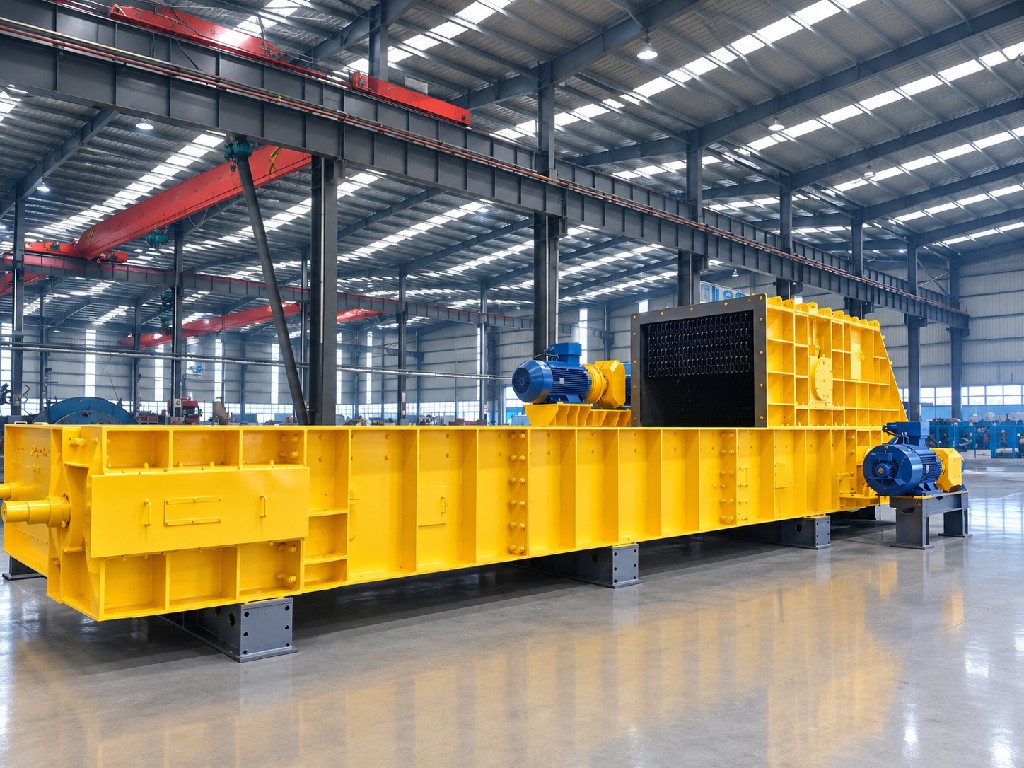
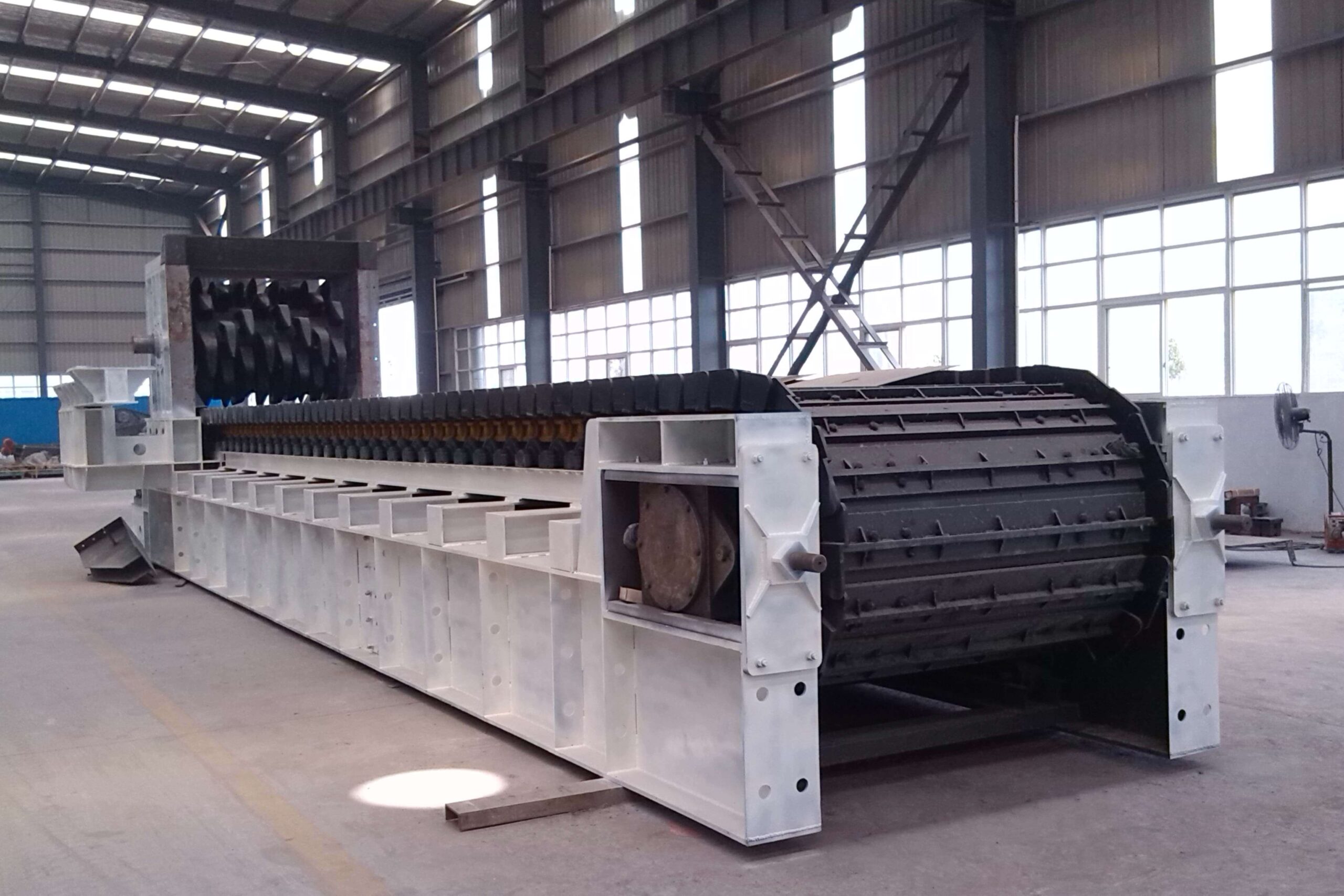
A Coal Feeder Breaker is a heavy-duty mining machine that combines controlled coal feeding with primary size reduction in a single unit. It is commonly used in underground and surface coal mines to receive large ROM coal from mining equipment and deliver a controlled, reduced-size material stream to conveyors or downstream processing equipment.
Unlike a standalone crusher, a feeder breaker performs two functions within the same machine. The feeder section regulates the movement of coal, while the breaker mechanism reduces oversized lumps that could interfere with downstream conveying or processing.
This integrated design is particularly useful where continuous coal flow, large feed handling and reliable underground operation are important.

How Does a Coal Feeder Breaker Work?
The operating process is:
ROM Coal → Receiving Hopper → Controlled Feeding → Breaking → Discharge Conveyor
Large coal lumps are loaded into the receiving section by mining or loading equipment. The feeder mechanism moves the material forward at a controlled rate.
As the coal reaches the breaker assembly, oversized lumps are broken into smaller pieces. The reduced material then passes onto the discharge conveyor or transfers to the next stage of the coal-handling system.
The feeder speed and breaker configuration can be selected according to the required throughput, feed characteristics and downstream conveyor capacity.
Key Features
Integrated Feeding and Breaking
The feeder and breaker are combined into one machine, reducing the need for separate primary feeding and breaking equipment.
Controlled Coal Flow
The feeder section regulates the material stream and helps maintain a consistent flow to downstream conveyors.
Large ROM Coal Handling
A suitable configuration can receive large coal lumps directly from mining equipment or a loading system.
Primary Size Reduction
The breaker reduces oversized coal to a more manageable size for continuous conveying or subsequent processing.
Underground Mining Compatibility
The equipment can be configured for demanding underground coal-mining environments where space, access and continuous operation are important.
Conveyor System Integration
The discharge arrangement can be coordinated with underground or surface belt conveyors and other coal-handling equipment.

Technical Specifications
| Parameter | Specification |
|---|---|
| Equipment Type | Coal Feeder Breaker |
| Application | Coal Mining & Material Handling |
| Main Functions | Feeding + Primary Breaking |
| Material | ROM Coal |
| Capacity | Application Dependent |
| Maximum Feed Size | Project Dependent |
| Product Size | Project Dependent |
| Feeder Type | Heavy-Duty Continuous Feeder |
| Breaker Type | Customized |
| Drive System | Electric / Application Dependent |
| Installation | Underground / Surface / Customized |
Final specifications should be selected according to the mining method, coal characteristics, required capacity and conveyor arrangement.
Main Components & Design
Receiving Hopper
The receiving section accepts ROM coal from mining or loading equipment and provides a controlled entry point into the machine.
Feeder Assembly
The feeder moves coal through the machine at a controlled rate. Its design must match the required throughput and operating conditions.
Breaker Assembly
The breaker reduces oversized coal lumps before discharge. Breaker geometry can be configured according to feed size and required product size.
Drive System
The drive system supplies power to both the feeding and breaking functions according to the machine configuration.
Frame and Support Structure
The heavy-duty frame supports the operating assemblies and withstands the mechanical loads generated during continuous coal handling.
Discharge Section
The discharge area transfers processed coal to a belt conveyor or another downstream handling system.
Applications & Coal Handling
A Coal Feeder Breaker is commonly used for:
- Underground coal mining
- Longwall mining systems
- Continuous mining operations
- ROM coal handling
- Mine conveyor feeding
- Underground transfer points
- Surface coal receiving systems
The equipment can handle suitable coal types including:
- Bituminous coal
- Sub-bituminous coal
- Lignite
- Thermal coal
- Coking coal
- Coal containing moderate mineral inclusions
The actual configuration depends on coal hardness, moisture, lump size, density and the amount of rock or other mineral matter present in the feed.
How to Choose the Right Coal Feeder Breaker?
Selection should start with the required material flow and mining conditions.
First, determine the required capacity in tonnes per hour. The feeder must be capable of maintaining the required coal flow without restricting the upstream mining operation or overloading the downstream conveyor.
Next, identify the maximum ROM coal lump size and required breaker discharge size. These parameters determine the appropriate receiving opening and breaker configuration.
Installation conditions are especially important for underground applications. Available space, conveyor elevation, equipment access, mine roadway dimensions and maintenance access can affect the overall machine design.
Coal characteristics should also be evaluated. Moisture, clay content, hardness and mineral inclusions may influence the breaker arrangement and wear protection.
For an accurate configuration, provide:
Coal Type + Capacity + Maximum Lump Size + Required Discharge Size + Moisture + Mining Method + Conveyor Specification
Advantages & Customization
A Coal Feeder Breaker combines material feeding and primary breaking within a single machine. This can simplify the material-handling arrangement where coal needs to be controlled and reduced before entering a conveyor system.
Possible customization includes:
- Feeding capacity
- Hopper dimensions
- Maximum feed opening
- Breaker configuration
- Product size
- Feeder speed
- Drive power
- Wear protection
- Discharge height
- Overall machine dimensions
For underground projects, the machine can also be configured around roadway dimensions, conveyor layout and available maintenance space.
Frequently Asked Questions
A Coal Feeder Breaker is a mining machine that combines controlled coal feeding with primary breaking of oversized ROM coal.
It is commonly used in underground and surface coal mines to receive ROM coal, regulate material flow and reduce oversized lumps before conveyor transport.
ROM coal enters the receiving section, the feeder moves it forward at a controlled rate, and the breaker reduces oversized lumps before the material is discharged to the conveyor.
Yes. Handling large ROM coal is one of its main applications. The maximum feed size must be matched to the receiving opening and breaker configuration.
A Feeder Breaker combines feeding and primary breaking in one machine. A conventional crusher generally focuses primarily on size reduction and normally requires separate feeding equipment.
Yes. It can be configured for underground coal operations, including applications where space, conveyor integration and continuous material flow are important.
Suitable configurations can process coal with elevated moisture, but highly sticky or clay-rich material requires specific evaluation because it can affect material flow and equipment loading.
Yes. Capacity, hopper dimensions, breaker configuration, discharge size, drive system, wear protection and overall dimensions can be customized according to the mining application.


