In a mining or coal-handling plant, the most damaging material event is often not an extreme average tonnage. It is the sudden drawdown of a hopper, a truck dump that releases a pocket of coarse rock, or a dozer push that sends a dense wave of run-of-mine (ROM) material toward the crusher. A Mineral Sizer may have adequate installed power and nominal capacity, yet still trip, choke, or suffer unnecessary tooth wear when its feed is erratic.
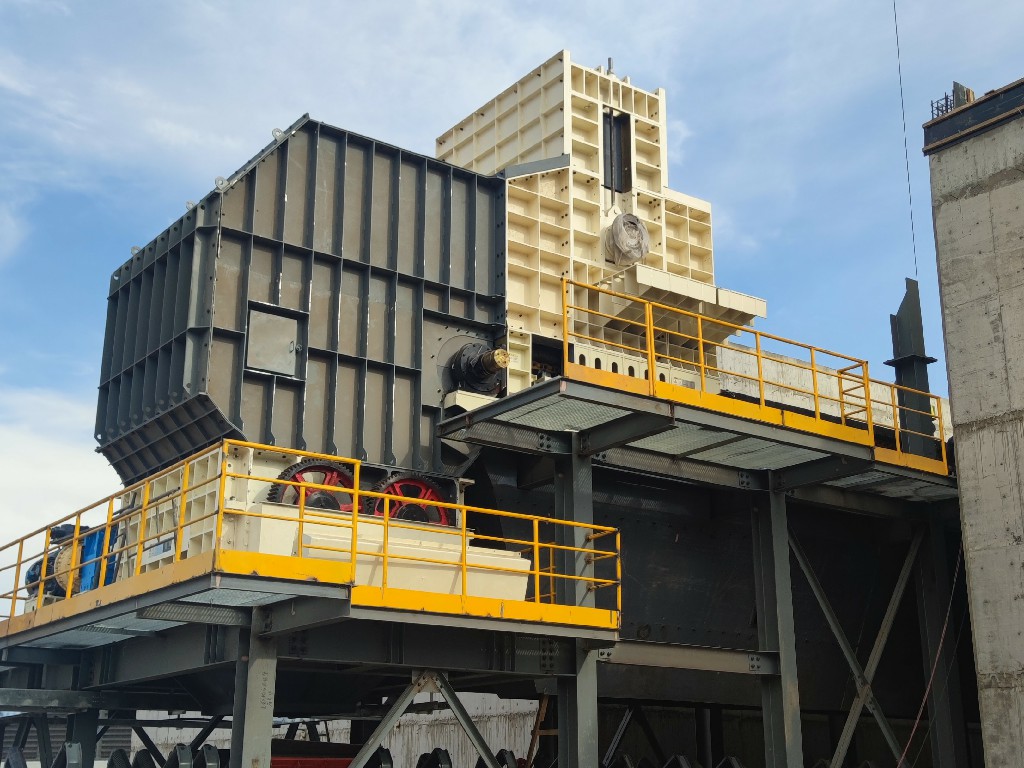
The practical answer is not simply a larger crusher. It is a properly engineered Apron Feeder working as the surge-control layer ahead of the Mineral Sizer. Together, these two machines create a more stable front end: one accepts the impact and variability of ROM material, while the other receives a controlled, evenly distributed feed that it can break efficiently.
Why ROM Surges Cause Expensive Problems
ROM material is rarely consistent. In coal, the feed may include wet fines, clay bands, oversized lumps, and occasional tramp material. In hard-rock mining, bulk density, fragmentation, and maximum lump size can shift dramatically between blasts or loading areas. When this variable material falls directly onto a crusher, the crusher is forced to absorb every impact and every peak load.
The consequences are familiar to plant operators: fluctuating motor load, uneven product size, increased fines, blocked chutes, tooth damage, and unplanned stoppages. Even when the crusher does not trip, repeated overload events can shorten the service life of shafts, gearboxes, couplings, and wear parts.
A stable crushing circuit begins before the crushing chamber. It begins by controlling how material is withdrawn from the hopper and presented to the crusher.
The Apron Feeder: Built for the Violent End of ROM Handling
An Apron Feeder is designed for a job that lighter-duty feeders should not be asked to perform: receiving heavy, abrasive, and irregular ROM material under significant impact. Its overlapping steel pans, chains, rollers, and heavy-duty drive system form a robust extraction platform beneath a hopper, stockpile, or dump pocket.
Rather than allowing a large mass of ore or coal to rush downstream at once, the Apron Feeder meters material forward at a controlled speed. This creates a buffer between the unpredictable loading event and the crushing stage. The feeder takes the shock; the Mineral Sizer receives a regulated burden.
This is especially important where material has a high maximum lump size, high bulk density, or abrasive characteristics. A correctly selected Apron Feeder is not merely a conveyor with steel pans. It is a load-management machine. Its width, pan design, chain pitch, drive torque, skirt arrangement, and hopper interface must all be matched to the actual ROM condition—not just the average tonnes per hour shown on a process flow diagram.
Why a Mineral Sizer Performs Better with Controlled Feed
A Mineral Sizer is valued in mining and coal applications for its compact layout, high torque, low-speed crushing action, and ability to produce a controlled product with limited unnecessary degradation. Its rotating rolls and tooth segments grip, draw in, and break material in stages. To perform consistently, however, the sizer needs material distributed across the roll width at a manageable rate.
Direct surge loading can create a localized pile at one side of the machine. This leads to uneven tooth loading, poor material engagement, higher power fluctuations, and more rapid wear. A sudden wave of sticky or oversize material can also bridge at the inlet or overload the crushing zone.
By contrast, an Apron Feeder spreads the material flow and provides a steady feed depth. The Mineral Sizer can then use its tooth profile, roll speed, and crushing gap as intended. The result is more predictable reduction, better equipment protection, and a cleaner operating rhythm for the entire ROM crushing circuit.
How the Apron Feeder and Mineral Sizer Work as One System
The most reliable arrangement treats the Apron Feeder and Mineral Sizer as one coordinated system, rather than two separate pieces of equipment connected by a chute.
The Apron Feeder should be sized for peak extraction duty, not only nominal plant capacity. It must account for the maximum expected ROM surge, feeder loading depth, hopper opening, material density, moisture, and the possibility of large lumps resting on the pans. Its variable-speed drive should allow operators or automation controls to match feeder speed to the real-time condition of the Mineral Sizer.
The Mineral Sizer should then be selected around the actual feed envelope delivered by the feeder: maximum lump size, expected fines content, material strength, moisture, desired product size, and design throughput. Chute geometry between the two machines matters as well. Poorly designed transfer points can undo the feeder’s work by causing segregation, impact concentration, or buildup before the material reaches the sizer.
A simple control philosophy is often highly effective. Monitor sizer motor load, speed, and downstream conveyor availability; then adjust Apron Feeder speed within safe operating limits. When a dense ROM pocket reaches the feeder, the system can slow extraction before the sizer is overloaded. When the sizer is operating below target load, feed rate can increase smoothly. This is controlled production—not reactive recovery after a choke.
Details That Determine Whether the System Succeeds
Reliable surge control is won during equipment selection and layout. Specify normal, peak, and maximum design capacities separately. Provide realistic bulk density values for both volumetric capacity and drive-power calculations. Include maximum lump size, particle-size distribution, moisture, clay content, abrasiveness, and expected feed temperature.
For the Apron Feeder, pay close attention to hopper geometry, drop height, impact loading, pan width, skirt clearance, and access for chain and roller maintenance. Maintaining an appropriate material bed at the loading end can help reduce direct impact on exposed components.
For the Mineral Sizer, tooth form and roll configuration should reflect the material’s breakage behavior. Coal, limestone, phosphate, shale, and hard rock do not all respond to the same tooth geometry. Consider the required product size, tolerance for fines, wear life, and how quickly wear segments can be inspected or replaced. The lowest purchase price rarely produces the lowest lifecycle cost when the machine must process difficult ROM feed every day.
The Operational Payoff
When an Apron Feeder and Mineral Sizer are correctly matched, the plant becomes less sensitive to the natural variability of ROM material. Operators gain better control over crusher loading. Maintenance teams see fewer shock-related events. Downstream conveyors, screens, and transfer chutes receive a more consistent stream of material.
Most importantly, the crushing circuit no longer treats every ROM surge as an emergency. The Apron Feeder absorbs the instability; the Mineral Sizer delivers the reduction. That division of responsibility is what turns an unpredictable dump pocket into a controlled, dependable production system.
FAQ
An Apron Feeder regulates the extraction rate from the hopper and distributes ROM material more evenly into the Mineral Sizer. This limits sudden peak loads, reduces uneven roll loading, and helps prevent choking or overload trips.
An Apron Feeder and Mineral Sizer combination can be engineered for ROM coal, limestone, phosphate, potash, bauxite, shale, oil sands, and many hard-rock ores. Final selection depends on lump size, density, abrasiveness, moisture, clay content, and required product size.
Apron Feeder capacity should consider normal throughput, maximum design throughput, hopper discharge conditions, maximum lump size, bulk density, material depth, and expected surge volume. It should not be selected using average tonnes per hour alone.
Inspect Apron Feeder pans, chains, rollers, sprockets, skirts, and drive components regularly. For the Mineral Sizer, monitor tooth wear, roll condition, crushing gap, lubrication, gearbox performance, and protective controls. Planned inspection before a wear component fails is far less disruptive than emergency repair.