A mine rarely loses capacity in one dramatic failure. More often, it disappears in familiar interruptions: trucks wait at a full hopper, a belt trips on a surge, oversize bridges at the crusher inlet, or operators slow the system to control spillage. Across a shift, those small events turn installed tonnes per hour into missed production.
The issue is often not the crusher alone. It is the transition from intermittent run-of-mine (ROM) delivery to the continuous, controlled flow required by conveyors and downstream processing. A feeder breaker is designed for this exact point. By combining surge receiving, controlled feeding and primary size reduction in one machine, it can remove a major bottleneck before it spreads through the circuit.
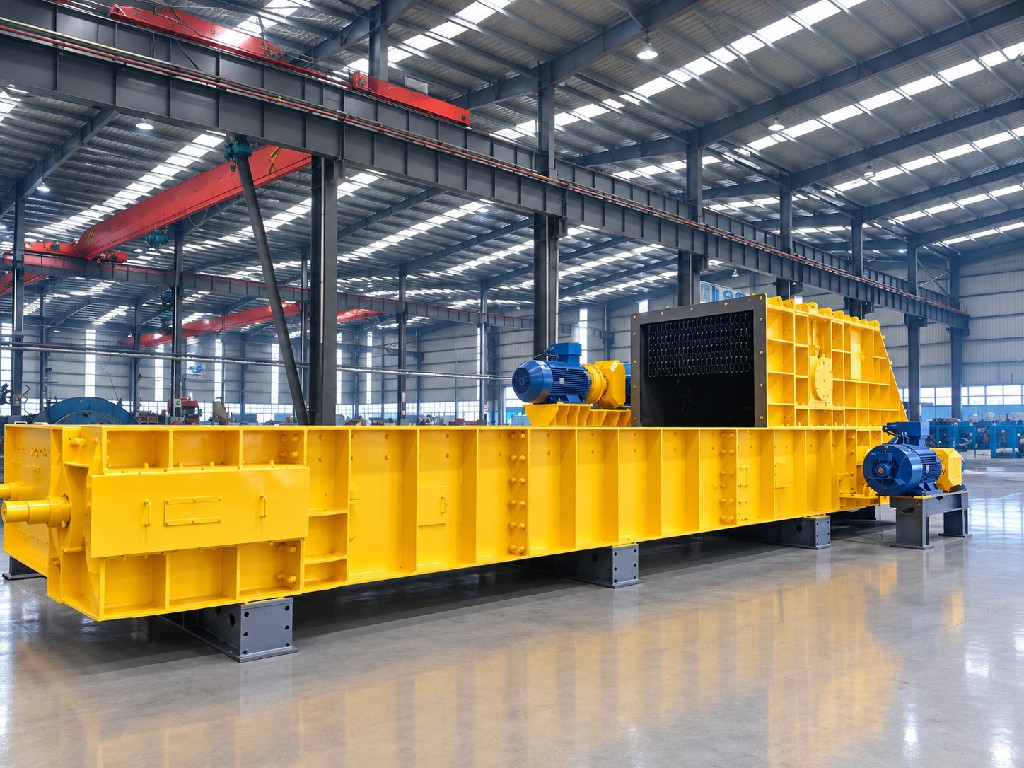
Capacity Is Often Lost Before Crushing Begins
ROM coal and other friable minerals arrive in slugs, not in a smooth stream. Each dump can contain a different mixture of fines, moisture, slabby pieces and oversize rock. Conveyors perform best with a stable, centered load; crushers need feed that matches their opening and duty cycle.
Without a buffering and metering step, the circuit must react to the worst moment of every dump. Belts may be oversized yet underused, transfer chutes wear rapidly, dust and spillage increase, and the primary crusher sees peak loading followed by starvation. The nameplate capacity can look adequate while average throughput remains disappointing.
A feeder breaker corrects that mismatch at the intake. Its receiving area provides surge capacity so trucks, loaders, shuttle cars or dozers can discharge efficiently. A heavy-duty chain-and-flight conveyor draws material forward at a controlled rate. Near the discharge end, a low-speed breaker roll reduces large lumps against the deck and flights before the material reaches the next conveyor or crushing stage.
One Machine, Three Capacity Controls
The value of a feeder breaker is not simply that it breaks rock. It performs three linked jobs that protect downstream capacity.
First, it absorbs uneven arrival patterns. A short-term surge at the intake does not have to become a surge on the belt, helping reduce haul-unit waiting time while keeping plant feed stable.
Second, it meters the load. Conveyor speed, flight geometry, breaker position and controls deliver a belt-friendly flow. Consistent loading improves belt tracking, lowers impact at transfer points and helps downstream equipment operate closer to its efficient duty point.
Third, it produces a controlled primary product size. The breaker roll’s picks engage oversize lumps and slabby material, reducing them to a size the next conveyor, sizer or secondary crusher can accept. In coal handling, this matters because a large flat lump can pass an opening yet still cause transfer problems later in the circuit.
Specify the Feeder Breaker for Real Operating Conditions
A feeder breaker must be designed around the real material and operating pattern, not a single peak-tonnage figure. Establish maximum lump size, size distribution, bulk density, moisture, fines or clay content, abrasiveness and strength. Wet coal with high fines behaves very differently from dry, blocky material with a high percentage of rock.
The loading method is equally important. A feeder breaker beneath a truck-dump hopper needs different surge volume, deck length and impact protection than a dozer-trap or reclaim installation. If trucks arrive in batches, the machine needs enough receiving and conveying capacity to recover between dumps without a persistent queue.
Specify protective systems too. Torque-limiting drives, overload monitoring, underspeed detection and interlocks with the discharge conveyor help prevent a local upset from becoming a lengthy stoppage. Dust suppression, guarded moving parts, emergency stops and safe access to wear components are production requirements as well as safety requirements.
Design for Availability, Not Only Peak Tonnage
A feeder breaker lives with impact, abrasion and occasional abuse. Availability depends on maintenance-friendly construction: replaceable deck liners, robust chains and flights, accessible pick holders, guarded drives, condition monitoring and practical lifting access.
Pay close attention to breaker picks and wear surfaces. Worn picks can raise power draw, weaken product control and pass damage downstream long before a major failure is visible. Incorrect chain tension or worn flights can also compromise feed control. Track average tonnes per hour, utilization, belt loading, motor current, trips, blockage events, pick consumption and intake downtime. These measurements reveal whether the true constraint is primary sizing, surge capacity, conveyor capacity or upstream mining practice.
Turn the Bottleneck into Controlled Flow
A feeder breaker will not compensate for an undersized belt or poor transfer chute. It can, however, stop uncontrolled ROM delivery from dictating the performance of the whole system. When matched to the material, haulage method and downstream limits, it creates a steadier feed, a conveyable product and a more forgiving operating window.
Recovered capacity starts at the intake: put surge handling, feed control and primary reduction where the bottleneck begins.
FAQ
A feeder breaker is commonly used for ROM coal, lignite, salt, gypsum, petroleum coke and other friable minerals. Final suitability depends on lump size, strength, abrasiveness, moisture and rock content.
A feeder breaker meters irregular truck, loader or dozer dumps into a steadier stream and reduces oversize before it reaches the belt. This can reduce spillage, transfer impact and uneven belt loading.
Base capacity on peak dump rate, average production target, haul-unit size and frequency, surge requirement, material characteristics, product top size and the actual downstream conveyor limit—not nameplate tph alone.
A mobile feeder breaker suits changing loading points, advancing mine development or sites where fixed civil works are impractical. A stationary unit generally suits a permanent dump pocket, hopper or plant.
Inspect picks and holders, chains and flights, deck liners, drives, guards, sensors, discharge chute wear and emergency-stop functions. Review motor current and trip history as part of condition-based maintenance.